

Alfonso Morante: “We are a lead certified Regenerative Agriculture Operation in Latin American”
News originally published by
EIN Presswire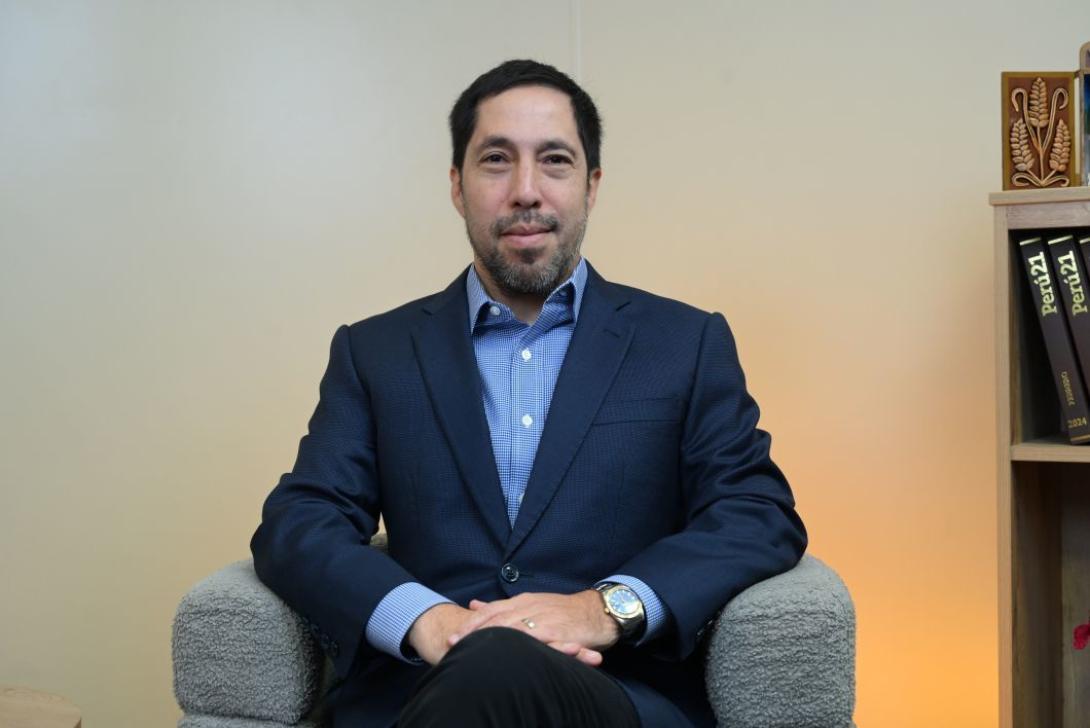
Alfonso Morante, CFO of Ocho Sur: “Those of us who work at Ocho Sur have the mission of doing agribusiness with excellence, but above all, of positively changing the lives of thousands of Peruvians in the Amazon.” (Photo: Javier Zapata / Perú21)
In an interview with Perú21, Ocho Sur’s CFO explains how the company combines productivity, environmental conservation and rural development in Ucayali.
Ocho Sur has had operations in Ucayali for 10 years, where it produces and processes oil palm at its own mill. During this time, it has become the largest exporter and the largest formal employer in the region. Alfonso Morante, director of the company, discusses the successful operating model they promote and the importance of sustainable agribusiness in the Amazon.
What care does Amazonian agribusiness need in order to be sustainable?
Agriculture in the rainforest has specific characteristics. There is the heat and the intense rain, the composition of the soils, the diversity. All of these elements must stay in balance. The concept of regenerative agriculture has been used for years and seeks long-term agriculture, aiming not only to obtain the best crop productivity but also to take care of the soil. It is based on practices that prevent soil erosion and restore nutrients and the balance of the soil, and that combine techniques, for example, livestock within agricultural activities. Beneficial insects are also used for pest control instead of chemical products, as well as biofertilizers. It is a concept we have applied for many years at Ocho Sur, and it is giving us very good results.
Who certifies these practices?
Last year we received regenerative certification under the Regenagri standard, developed in the United Kingdom and verified by the certification auditor Control Union Brazil. We have certified 12,000 hectares of our estates as regenerative agriculture. We are one of the largest certified regenerative agriculture operations in Latin America.
Is there production on all of the certified hectares?
No. Those 12,000 hectares are all the estates where we have our palms, but part of them are forest reserves that we are actively reforesting, and another part are the streams, waterways and bodies of water around our estates, which we maintain as biological corridors.
Why is this certification so important?
We are operating in an environment with great biodiversity, both in the forest and in the wildlife. And the bodies of water, which are key for any species, are needed. That is why we leave water corridors and reforest with native species, so that these species can move freely. We are respecting their habitat.
What does the Regenagri standard mean for Ocho Sur?
It is the right way to practice high-productivity agriculture over the long term. Oil palm is a permanent crop that can be harvested for 30 years or more. It is not just about maximizing this year’s productivity; the goal is to maximize productivity over the entire life of the crop, and the way to do that is with regenerative agriculture that takes care of the soil. Caring for the environment and good-practice, high-productivity agriculture go hand in hand and reinforce each other.
The use of livestock to care for the soil caught my attention.
Several years ago we incorporated buffalo, mules and bulls into our operation. They help with weed control, fertilize the areas and help avoid the use of equipment or machinery that, in the end, not only compacts the soil but also requires fuel. This reduces the operation’s carbon footprint. In the end, nature is much wiser than any of us, and to the extent that you carry out a sustainable activity that respects nature, it comes back and rewards the effort. We make sure that soils do not degrade or lose their nutrients and affect the agricultural future. We are sharing this vision with the farmers in the area.
What is Ocho Sur’s impact?
Oil palm in general is a crop whose initial impulse was the substitution of coca leaf crops in Peru, and it has been one of the most successful crops in the fight against drug trafficking. There are more than 40,000 hectares that are oil palm today but were once illegal coca leaf. At least 70% of our industry is made up of small and medium-sized farmers. We have about 200 families working with us. We give them technical assistance and the best seedlings, support them with fertilizers, and offer a preferential purchase agreement for their fruit. They have been planting oil palm very successfully for years, and this has meant a radical change in their lives. A farmer from a rural village in the rainforest has a family income of S/600 per month. With five hectares of oil palm, it multiplies to S/2,500, and with 10 it can be S/5,000.
How much is exported?
Oil palm is the main source of vegetable fat in the world; approximately 35% of the vegetable fats consumed worldwide come from it. Vegetable fat is used for everything, from food and beverages to cosmetics, soaps and creams, and even biofuels. One of the inputs that can be used to produce biodiesel is palm oil, a mass-consumption product all over the world and therefore an exported commodity. We export 90% to the international market, but there is also a very large market in Peru.
This interview was originally published by Perú21
Comunicaciones Ocho Sur
OCHO SUR
Legal Disclaimer:
EIN Presswire provides this news content "as is" without warranty of any kind. We do not accept any responsibility or liability for the accuracy, content, images, videos, licenses, completeness, legality, or reliability of the information contained in this article. If you have any complaints or copyright issues related to this article, kindly contact the author above.
